
"Over the last eight years testing global and India-facing platforms, the most important lesson is simple: understanding the rules before depositing protects your bankroll better than any welcome bonus." - Nisha Rao, Casino and Betting India

Last updated: July 2026
Online poker has evolved from a niche hobby into a highly accessible format for millions of users worldwide. Before taking a seat at a virtual table, exploring how the mechanics work helps Indian players manage their entertainment budget effectively. This guide explains game formats, hand rankings, payment context, player safety, and the legal landscape for entering the digital poker environment.
What you will learn: Poker is a skill-based card game. Begin with free Texas Hold'em to master the interface and rules. Check hand rankings before every session. Verify the platform's license and KYC process. Read bonus wagering terms in full before depositing. And confirm the legal status of online poker in your specific Indian state.

What Is Poker and Why Players Choose Poker Online
Poker is a skill-based card game involving structured betting, where participants aim to construct the strongest hand or convince opponents to fold. Globally, poker variants fall into three broad families: Draw poker, Stud poker, and Community card poker. Each comes with distinct dealing and betting mechanics.
Draw poker involves players receiving a complete hand and then improving it by replacing cards. Stud poker deals a combination of face-up and face-down cards across multiple rounds. Community card poker, which includes the globally dominant Texas Hold'em and Omaha, gives each player private cards supplemented by shared board cards.
Players choose online poker for its uninterrupted 24/7 availability, accessible micro-limits, and the convenience of mobile applications.
The transition from physical tables to digital platforms happened because software enables a seamless experience. In a digital environment, the engine handles card distribution, calculates pot sizes, and tracks betting rounds automatically. This reduces the cognitive load for beginners, letting them focus on game strategy instead.
"Online poker attracts players through round-the-clock availability, format diversity, and mobile access without geographical restrictions." - UNLV International Gaming Institute, Online Poker Post-Boom: Sitting at the Virtual Poker Table Ten Years Later (2023). https://www.unlv.edu
Statistical analysis supports the strategic nature of the game, too. As the number of hands played increases, player skill metrics consistently deviate from random distributions. That confirms poker rewards study and discipline over time. - "Online Poker and Rummy - Games of Skill or Chance?", arXiv preprint (2023). https://arxiv.org
Indian users prefer these platforms because they often integrate familiar banking options like UPI alongside standard gameplay. Before diving into the technical aspects, understanding basic vocabulary will clarify the learning process.


- Poker:A family of card games where players wager on the strength of their hand based on specific rules.
- Blinds:Mandatory bets placed by two players before the dealer distributes the cards to initiate the pot.
- Cash:Real money or virtual games where chips carry direct value and players can leave anytime.
- Tournament:A structured event with a fixed buy-in, where participants compete until one person wins.
- Players:Individuals participating at the table who must follow fair play rules and terms.
- App:Mobile software allowing you to access the game lobby directly from a smartphone or tablet.
- Sites:Web-based platforms hosting various tables, networks, and gaming communities securely.
- Collusion:The act of two or more players secretly cooperating at a table to gain an unfair advantage over others, strictly prohibited on all regulated platforms.
- Anti-banking:A rule preventing a player who leaves a table with winnings from rejoining the same table within a set period (often 60 minutes) with a smaller stack than they left with, protecting other players from hit-and-run tactics.

What Makes Online Poker Different from Live Play
Online poker operates at a significantly faster pace, handles automated calculations, and connects a massive global pool of competitors compared to live poker. You do not have to shuffle cards or count chips manually.
In a physical venue, the dealer manages the deck, and you might see 25 to 35 hands per hour. Online platforms can deliver 60 to 100 hands per hour at a single table. That speed requires faster mental processing from players. Additionally, an online platform allows multi-tabling, where software lets you run multiple games simultaneously. While this appeals to high-volume regulars, beginners should stick to one table.
Worth noting: online interfaces offer adjustable settings, letting players use time banks and built-in trackers that assist with mathematical decisions. These tools simply do not exist at a live felt.
Free Play, Real Money and Practice Value
Free play relies on virtual chips to teach mechanics without financial risk, whereas real money poker requires cash deposits. Leveraging free formats is the most practical step for Indian beginners to understand software navigation before committing funds.
Many players struggle with interface controls during their initial sessions. Free poker offers a relaxed environment to learn how to adjust bet sliders, locate chat functions, and understand hand strength. However, the psychological dynamic shifts completely when cash is involved. The transition to real money changes emotional involvement and risk perception even when the game mechanics remain identical. This finding is consistent with longitudinal qualitative research on gambling behaviour. - "Playing for Fun or Gambling for Money", qualitative longitudinal study (2018; findings corroborated by 2023-2024 follow-up data).
Regular online poker players also show measurably impaired adaptation to disadvantageous decisions compared to non-gamblers, according to Iowa Gambling Task experiments with EEG measurements. - "Impact of Online Poker Gambling on Behavioural and Neural Outcomes", PubMed Central (2024). https://www.ncbi.nlm.nih.gov/pmc/
Moving to real tables introduces anxiety, which can disrupt a tight strategy. So treat free modes strictly as a software tutorial rather than an accurate simulation of opponent behaviour.
Disclaimer: The information in this section is general in nature and does not replace consultation with a responsible-gambling specialist. If playing stops being entertainment, contact a player-support helpline.
Poker Rules Every Beginner Should Know First
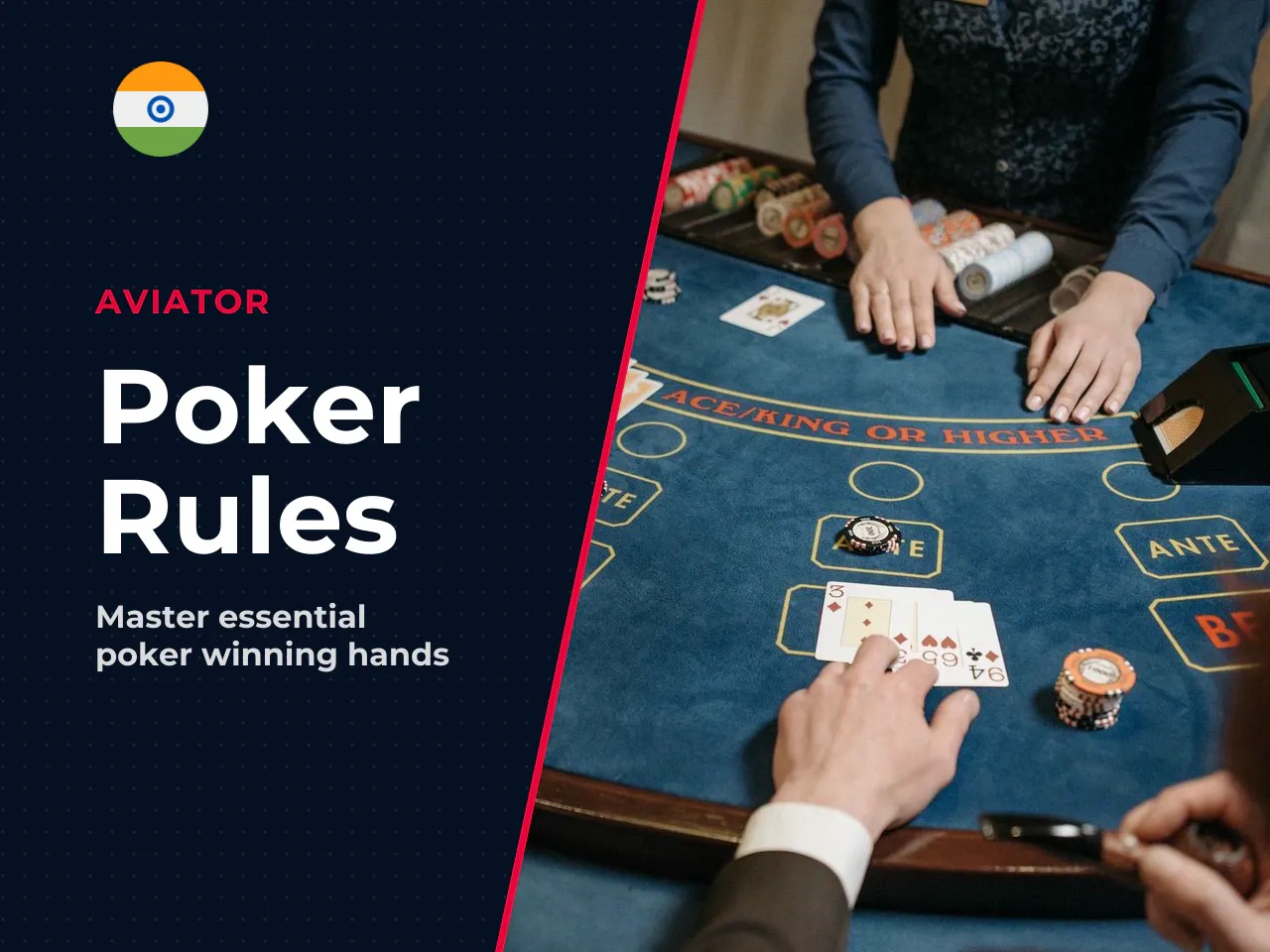
To play poker, you must know the official hand rankings, follow the strict order of betting, and understand how community cards shape the board. Grasping these poker rules prevents costly misclicks and positional errors during rapid online action.
The poker game rules dictate that action moves clockwise around the table. Before any action occurs, standard variants require an initial bet to seed the prize pool. Players receive private cards, followed by shared cards dealt face-up in the center. The core tension relies on deciding whether your private holding, combined with the public board, justifies risking more chips. If multiple players remain after the final card drops, a showdown determines the winner.
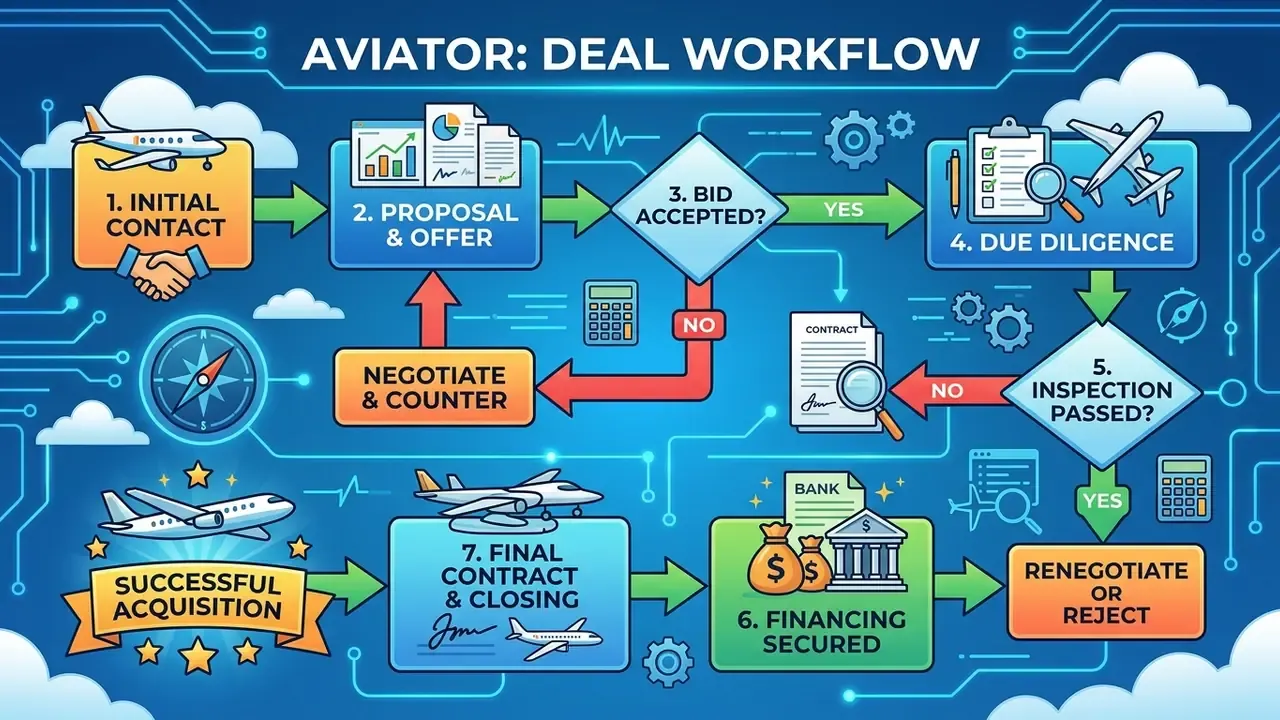
- Blinds Posting: Two designated players place mandatory bets.
- Pre-flop: Dealer distributes private cards; players choose to fold, call, or raise.
- The Flop: Three community cards are dealt; a new betting round occurs.
- The Turn: A fourth public card appears, triggering another round of bets.
- The River: The final community card is revealed for the last betting phase.
- Showdown: Remaining active participants reveal hands to claim the pot.
Hand Ranking and Winning Logic
Winning logic dictates that the pot goes to the person holding the highest-value five-card hand or the last remaining individual if everyone else folds. Recognizing card combinations is the absolute fundamental layer of any poker game.
Below is the complete hand-ranking cheat sheet, from strongest to weakest, with approximate probabilities for a five-card deal from a standard 52-card deck (probabilities via standard combinatorial calculation):
| Rank | Hand | Description | Probability |
|---|---|---|---|
| 1 | Royal Flush | A, K, Q, J, 10 of the same suit | 0.000154% |
| 2 | Straight Flush | Five consecutive cards of the same suit | 0.00139% |
| 3 | Four of a Kind | Four cards of identical rank | 0.024% |
| 4 | Full House | Three of a kind plus a pair | 0.144% |
| 5 | Flush | Five cards of the same suit, not in sequence | 0.197% |
| 6 | Straight | Five consecutive cards of mixed suits | 0.392% |
| 7 | Three of a Kind | Three cards of the same rank | 2.11% |
| 8 | Two Pair | Two separate pairs | 4.75% |
| 9 | Pair | Two cards of the same rank | 42.26% |
| 10 | High Card | No matching combination; highest card plays | 50.12% |

Source: Standard poker probability calculations - Wikipedia, "Poker probability" (2024). https://en.wikipedia.org/wiki/Poker_probability
According to these probability statistics, making a pair is relatively common, happening about 42% of the time, while a flush only hits roughly 0.19%. Long-term success in online poker is statistically linked to measurable skill variables rather than card distribution. - "Online Poker and Rummy - Games of Skill or Chance?", arXiv preprint (2023). https://arxiv.org
Beginners often overvalue mediocre pairs in online poker, resulting in unnecessary losses against tighter opponents. Print or bookmark the table above before your first session. Seriously, it helps more than you might expect.
Blinds, Betting Rounds and Table Action
Blinds are compulsory initial bets placed by the two players left of the dealer button, driving the table action and pushing the game forward. These forced investments ensure there is always a reward worth contesting.
The small blind is typically half the size of the overall minimum stake, while the big blind matches it entirely. Action then flows through designated phases: pre-flop, flop, turn, and river. During your turn, you must make a conscious action. You can fold your cards to avoid risk, call to match the preceding bet, or raise to increase the financial pressure on your challengers. Your table position deeply impacts the strength of your action. Acting later grants you maximum information about the table's intentions, which is a recurring theme you will see throughout this guide.
Main Poker Games and Which Format Suits Your Style
The most prominent poker games are Texas Hold'em and Omaha, available in either continuous cash formats or scheduled tournament events. Your choice should align with your available time, bankroll resilience, and preferred complexity.
| Format | Pacing (Tempo) | Learning Difficulty | Decisions per Hour | Entry Threshold |
|---|---|---|---|---|
| Texas Hold'em | Fast | Low (Easy to learn) | 60-80 | Accessible (Micro-stakes) |
| Omaha | Very Fast | High (Complex math) | 60-80 | Medium |
| Cash Games | Variable | Medium | High frequency | Flexible (Leave anytime) |
| Tournaments | Structured | Medium | Varies by stage | Fixed buy-in |

Texas Hold'em as the Most Popular Poker Game
Texas Hold'em stands as the industry baseline because it features simple two-card starting requirements and transparent game phases. It represents the gold standard, drawing the vast majority of online traffic. The discipline became globally dominant after Chris Moneymaker's 2003 WSOP Main Event victory, which triggered an estimated 400% increase in poker participation by 2005, according to the American Gaming Association (2006).
Texas Hold'em is widely reported to account for the overwhelming majority of all hands dealt across digital networks, though exact percentages vary by region and network. Online poker markets continue to demonstrate growth: in Pennsylvania alone, interactive gaming revenue reached $533 million in September 2025, a 5.43% year-over-year increase. - Pennsylvania Gaming Control Board, Monthly Revenue Release (September 2025). https://www.pgcb.pa.gov
The format requires players to form a hand using any combination of their two private cards and the five shared cards. It is an excellent starting environment because the mathematical odds are easier to calculate than in variants involving more hidden cards. Most educational material, basic strategy guides, and dedicated poker apps and casino platforms prioritize Hold'em for good reason.

Omaha, Cash Games and Tournaments
Omaha deals four private cards to every participant, driving intense variance and larger pots, while cash and tournament structures completely alter the payout strategy.
In Pot-Limit Omaha, you must use exactly two of your four hole cards alongside three board cards. This rule significantly increases the frequency of robust combinations like flushes and full houses, making the game chaotic and highly volatile. Variance in PLO can be roughly 2.5 times higher than in Hold'em, which is something to keep in mind before jumping in.
Cash formats offer a flexible environment where your chips operate as real currency, allowing you to walk away after any hand. Conversely, tournaments demand a flat entry fee in exchange for a starting stack. Once those tournament chips deplete, your session ends unless re-buys apply. Tournaments hold a highly skewed payout structure rewarding only the longest survivors.
"Players statistically prefer options with positive payout skew, a small chance of a large win, even when the expected value is equal." - "Skewness Preferences: Evidence from Online Poker", ScienceDirect / Tilburg University (2023). https://www.sciencedirect.com
How to Play Poker Online Step by Step
To play poker online, you must select a licensed operator, verify your account details through strict KYC steps, and navigate the application lobby responsibly. Approaching real money action with a methodical checklist lowers risk.
Disclaimer: The information below is general in nature and is not legal or financial advice. Online poker availability depends on the legislation of your jurisdiction.
Rushing the setup phase is a frequent error. Indian users must confirm that their chosen platform facilitates secure local transactions, such as NetBanking or UPI, without extreme fees. Creating an account involves providing accurate identity documentation. Attempting to bypass these requirements will freeze your payouts later. Once registered, move to the lobby, filter the game types by stake limits, and ensure you observe the table action before sitting down.
Choosing Poker Sites, Rooms or App
Selecting reliable poker sites requires evaluating legitimate licenses, checking the quality of customer support, and testing the mobile accessibility before connecting financial accounts.
Regulatory compliance dictates fairness. A robust platform leverages a certified Random Number Generator (RNG) to shuffle the virtual deck, preventing predictable outcomes. Look for independent audits from agencies like Gaming Laboratories International (GLI).
"Regulatory standards require transparent RNG, mandatory audits, and responsible-gambling tools. These are the key criteria when selecting a licensed operator." - "Regulatory Measures and Consumer Protection in Electronic Gambling", Stanford Law & Technology (2023-2024). https://law.stanford.edu

For mobile-first users, the app must load quickly and present clear visual buttons to prevent costly accidental bets. A crowded interface overcomplicates the experience. Read independent reviews focusing on payout speeds to ensure the chosen room handles transactions smoothly.
Where to start: notable poker rooms. Beginners looking for established platforms frequently encounter names such as PokerStars (the world's largest online poker site by traffic), GGPoker (known for innovative features and rakeback up to 60-80%), and WSOP Online (carrying the prestige of the World Series of Poker brand with freeroll access). For Indian players, India-facing platforms offering UPI deposits and INR tables are increasingly common. Always cross-check the operator's license against the issuing regulator's public register before depositing.
Red Flags - close the site immediately if you see:
- No license number or regulator name in the website footer.
- Customer support is unreachable or replies only via automated bots.
- Withdrawal requests are delayed beyond 7 days with no explanation.
- The RNG certification or audit report is missing or cannot be independently verified.
From Sign Up to the First Table
The journey to your first table starts with entering your personal data, supplying verification documents, and configuring limits in the cashier section. This sequence secures your profile.
During registration, you must provide a government-issued ID under standard Anti-Money Laundering directives, in line with requirements such as the EU Anti-Money Laundering Directive 2018/843 and equivalent Indian KYC norms. Once the platform authenticates your profile, you can access the cash desk. Modern platforms use dynamic limit filters, ensuring you only see stakes matching your current balance. Always locate the responsible gambling tools immediately upon logging in.
"Mandatory play breaks of as little as five minutes significantly increase the time to re-entry and reduce the size of subsequent bets." - "Regulatory Measures and Consumer Protection in Electronic Gambling", Stanford Law & Technology (2023-2024, citing Hopfgartner et al.). https://law.stanford.edu
 that integrate poker alongside other responsible-gaming features. **BEFORE YOU DEPOSIT:** - Verify the legal status and jurisdiction availa](/media/aviatorr_in_com_media_text_section_28_media_image_b7b22160_7859_42af_928e_c06bedaf2a9c_527facb27f.webp)
Explore licensed casino platforms that integrate poker alongside other responsible-gaming features.
BEFORE YOU DEPOSIT:
- Verify the legal status and jurisdiction availability in your specific Indian state.
- Read the strict bonus terms, specifically wagering requirements and expiration dates.
- Confirm the platform triggers identity checks (KYC) before allowing withdrawals.
- Set hard deposit and loss limits using responsible play tools immediately.
Disclaimer: Online poker for real money is available only to users of legal age (18+). Verify the legal status of online gambling in your region before registering.

How to Evaluate the Best Poker Sites Before Joining
Evaluating the best poker environments involves looking past flashy advertisements to check genuine cashout speeds, independent software audits, and the volume of active participants.
Operators use aggressive marketing to attract sign-ups, but safety and terms matter first. Key performance indicators involve how quickly a platform processes a withdrawal request via local methods. Software reliability is measured by stability during peak hours; sudden disconnects mid-hand are fatal to a bankroll. Digital game mechanics with randomised-reward monetisation are statistically associated with symptoms of gaming disorder and problem gambling, which is another reason to favour transparent, licensed operators over flashy unlicensed alternatives. - "Loot Box Purchases and Their Relationship with Internet Gaming Disorder and Problem Gambling", ScienceDirect (2023). https://www.sciencedirect.com
The operator must also hold a solid reputation regarding player complaint resolution. A quick search on poker forums for unresolved payout disputes tells you more than any homepage banner.

Bonuses, Freerolls and Rakeback Value
A bonus provides additional funds locked behind wagering requirements, freerolls offer cost-free access to real cash prize pools, and rakeback rewards consistent volume. Value depends entirely on your play frequency.
Welcome bonuses match your initial deposit but demand substantial turnover before you can withdraw them. In a recent review of an India-facing poker app, the platform advertised a massive 200% match offer that attracted many novices. We dug into the wagering requirements and found an unrealistic structural hurdle that expired in just seven days. By highlighting this in our checklist, users were able to skip the promotion and play with their own strict budgets instead.
"The expansion of online gambling increases the volume of data collected by operators, while attractive bonuses blur the line between practice play and real-money wagering." - "Betting on Privacy: Safeguarding Data in the Era of Online Gambling", UNLV Law Review (2023). https://scholars.law.unlv.edu

Freerolls award real money prizes with zero entry fee, making their mathematical expected value (EV) strictly positive for any participant. You risk nothing and can win something. While individual payouts per event tend to be small due to large fields, freerolls serve as genuine bankroll-building tools, especially for disciplined beginners. Rakeback, a percentage refund of tournament fees or cash pot taxes (commonly 10-30% at major rooms, with some operators offering up to 50-80% via VIP tiers), exclusively benefits high-volume grinders and rarely affects casual beginners.
Disclaimer: Bonus terms and conditions vary by operator and jurisdiction. Review the full terms on the platform's website before activating any offer.

Traffic, Software and Mobile Experience
High traffic ensures that you can find an active table at your preferred limit immediately, while optimized software prevents interface lag during critical decisions.
The concept of network liquidity is deeply important. A large player pool means games launch instantly across all stakes. A small pool restricts you to waiting for an opponent. In 2023, mobile traffic accounted for approximately 73% of all online poker sessions, with desktop making up the remaining 27%. - Global Poker Index, 2023 Online Poker Trends (2024). https://globalpokerindex.com
Battery efficiency and screen optimization matter as well. Top applications feature intuitive sliders and colour-coded buttons, reducing the risk of a misclick on a six-inch display.
"Mobile gambling interfaces are designed for minimal friction, one tap to bet, auto-rebuy, which simplifies play but complicates spending control." - "Betting on Privacy: Safeguarding Data in the Era of Online Gambling", UNLV Law Review (2023). https://scholars.law.unlv.edu

Free Online Poker vs Real Money Poker
Free online poker functions as a practical software tutorial blocking financial risk, while playing online poker with real money shifts the focus to bankroll management and genuine emotional discipline.
Choosing between the two depends strictly on your knowledge baseline. Free applications use virtual currency to facilitate action. They provide an outstanding venue to test strategies without losing actual capital. Conversely, real money formats demand a strict walk-away point. The moment you transition to cash tables, the gameplay slows down slightly because players start protecting their investments, entirely changing the psychological dynamic at the table.
When Free Poker Is the Better Choice
Remaining at free tables is the smartest option when you are learning the interface layout, memorizing winning combinations, or simply lacking a disposable entertainment budget.
If an application features a crowded display, use the complimentary mode to figure out where the "raise" and "fold" buttons live. Because virtual opponents bet erratically, treat the mode purely as a technical simulator. Attempting complex bluffs in a free game is useless since no one fears losing fake chips. Think of it this way: free poker teaches you the controls, not the competition.

When Players Move to Real Money Tables
Players migrate to real money tables when they completely understand positional strategy, can fold aggressively without frustration, and respect strict budgetary boundaries.
Start with the absolute lowest stakes available, typically known as micro-limits. Even at minimal values, financial stakes trigger cautious decision-making. You must practice bankroll management; the golden rule advises never risking more than a tiny percentage of your total funds at a single table. Treat casino play as entertainment, not income.
Building a bankroll from freerolls: it is possible. Freerolls are free-entry tournaments that award real cash prizes without requiring a buy-in. While the prize pools are small relative to the field size, freerolls offer a genuine path to building a bankroll from zero. The most famous example is Annette Obrestad, who started playing online poker for free and then, one freeroll tournament after another, built the bankroll that financed her transition to major real-money events and a World Series of Poker Europe bracelet at just 18 years old.

Basic Poker Strategy for Better Decisions Online
A basic strategy for online poker involves adopting a tight-aggressive methodology, which restricts the number of starting combinations you play while promoting decisive bets when you hold strong cards.
New players frequently feel pressured to act in every hand. The tight-aggressive (TAG) standard demands patience. By entering the pot with roughly 10% to 15% of the strongest holdings, like premium pairs or high-value connectors, you minimize variance. A 2021 analytical publication on the mathematics of the game by CRC Press (Mark Bollman, Mathematics of the Game of Poker) affirmed that generating expected value comes directly from structured, disciplined decision-making over thousands of hands. Skill overrides random card distribution over distance.
"Even experienced players exhibit the common ratio effect and ambiguity aversion, deviations from rational expected value under complex probability structures." - "Analyzing the Common Ratio Effect and Ambiguity Aversion in Poker", Duke Journal of Economics Papers (2024). https://dukespace.lib.duke.edu

Starting Hands and Table Position
Your table position dictates the exact range of starting hands you can safely play. Acting last gives you profound informational leverage over opponents who acted early.
The player on the dealer button acts last after the flop. This late position provides a noticeable analytical advantage, allowing you to widen your selection to roughly 40% of standard hands because you already witnessed the table's aggression. Conversely, players acting first (Under The Gun) are blind to their opponents' intentions. From early positions, you must discard weak combinations and proceed only with premium value to avoid falling into a statistical trap.
| Position | Typical Open Range | Informational Advantage |
|---|---|---|
| UTG (Early) | 10-15% | Lowest: acts first, no data |
| Middle | 18-25% | Moderate: some actions observed |
| Button (Late) | 40-50% | Highest: sees all pre-flop actions |
| Small Blind | 20-30% | Low: acts first post-flop |
| Big Blind | 15-25% (defend) | Low: but gets a discount to see the flop |

Common Beginner Mistakes in Online Play
Beginners typically lose bankrolls by playing excessively wide ranges, calling large bets out of curiosity, and letting the fast digital pace rush their cognitive processing.
Limiting your entries directly curtails losses. An undisciplined novice will call a bet lacking the necessary mathematical odds to justify the chase. Because an online client moves rapidly, the pressure to click forces impulsive errors. Frustration following losses further degrades calculated play and amplifies aggressive betting, and the online format accelerates this cycle because of rapid hand turnover. - "Impact of Online Poker Gambling on Behavioural and Neural Outcomes", PubMed Central (2024). https://www.ncbi.nlm.nih.gov/pmc/
During our test of a popular poker client, we noticed new participants auto-calling final bets with weak hands simply because the timer beeped. Pausing to evaluate the real board texture before clicking "call" is a necessary habit to avoid emptying your account on online gaming platforms.
Fact Check: "Poker is only luck."
Correction: While short-term variance involves chance, long-term success is dictated securely by mathematical strategy. In The Theory of Poker (David Sklansky, Two Plus Two Publishing), it is mathematically demonstrated that strategic skill completely dominates luck over the distance. Online platforms amplify this reality due to the sheer volume of hands dealt per session. Another common myth: "all online games are the same." In reality, game selection, stake level, and player pool composition vary enormously between poker sites, and choosing the wrong table can cost you more than a bad hand ever will.
Legality of Online Poker in India and Tax Obligations
Understanding the legal framework is critical for any Indian player considering real-money poker.
At the federal level, Indian courts, most notably the Supreme Court of India in its landmark rulings on games of skill, have recognised poker as predominantly a game of skill, not pure chance. This distinction places it outside the scope of the Public Gambling Act of 1867 in many interpretations. However, gambling regulation in India is a state subject, meaning individual states can and do set their own rules:
- States where online real-money poker is generally permitted include Goa, Sikkim (with licensing), and most states that have not enacted specific prohibitions.
- States where online poker or online gambling is explicitly restricted or banned include Andhra Pradesh, Telangana, Assam, Odisha, and Tamil Nadu (though legal challenges continue).
Always verify the current regulations in your specific state before registering on any platform.
Tax obligations: Under Indian tax law, net winnings from online poker are taxed at a flat rate of 30% TDS (Tax Deducted at Source) on net gains, as per Section 115BBJ of the Income Tax Act (effective from 1 April 2023 for online gaming). Most regulated platforms deduct this amount automatically before crediting your withdrawal. This means that if you win ₹10,000 in net profits, ₹3,000 is withheld as TDS. Factor this into your bankroll calculations because the effective payout from any winning session is lower than the nominal amount displayed.
Withdrawal timelines: E-wallet and UPI withdrawals on well-regulated Indian platforms typically process within 24 to 72 hours. Bank transfers may take up to five business days. Delays beyond this window without explanation are a red flag.
Responsible gambling and self-exclusion. If poker stops feeling like entertainment, that is a signal to step back. Most licensed platforms offer deposit limits, session timers, cooling-off periods, and full self-exclusion options. Use them proactively, not reactively. Organizations like the Responsible Gambling Council and local helplines can provide confidential support. Setting a loss limit before you sit down is not a sign of weakness. It is a sign that you understand the game.
Disclaimer: This section provides general information only and does not constitute legal or tax advice. Consult a qualified professional for guidance specific to your state and financial situation.
FAQ About Poker Online
Respuestas renderizadas en formato acorde al diseГ±o exportado: tarjetas oscuras, acento dorado y despliegue compacto.
1 Can Beginners Start with Poker Online on Mobile?
Can Beginners Start with Poker Online on Mobile?
Yes, beginners can comfortably start on mobile devices, provided they understand interface limitations and stick strictly to a single active table.
Modern mobile platforms feature dynamic sizing specifically engineered for touchscreen navigation. However, the smaller screen real estate increases the danger of misclicks, and complex HUD (Heads-Up Display) overlays used by advanced players are typically unavailable or restricted on mobile. Focus entirely on one game to learn the functional layout before exploring complex multi-tabling options.
2 Which Poker Game Is Easiest to Learn First?
Which Poker Game Is Easiest to Learn First?
Texas Hold'em carries the most straightforward learning curve because players manage only two personal cards while integrating a unified public board.
The structured betting rounds and visible community cards make it easier to calculate potential odds compared to Omaha's four-card complexity. Educational content overwhelmingly targets Hold'em, making tutorials readily available for a new player. Start with this popular framework, learn the fundamental tactics, and only diversify formats after building strict fundamental discipline.
3 Is Online Poker Legal in India?
Is Online Poker Legal in India?
Online poker is recognised as a game of skill at the federal level, but legality varies by state. Several states, including Andhra Pradesh, Telangana, and Assam, have enacted restrictions or outright bans. Check your state's current regulations and always play on platforms that hold a valid license from a recognised gaming authority.
4 Do I Need to Pay Taxes on Poker Winnings in India?
Do I Need to Pay Taxes on Poker Winnings in India?
Yes. Net winnings from online poker are subject to 30% TDS under Section 115BBJ of the Income Tax Act. Most regulated platforms deduct this automatically. Consult a tax professional for personalized advice.
5 What Is the Safest Way to Deposit and Withdraw?
What Is the Safest Way to Deposit and Withdraw?
Use only payment methods tied to your verified identity (UPI, NetBanking, or e-wallets linked to your KYC-verified account). Set deposit limits before your first session. Withdrawal times range from 24 hours (e-wallets) to five business days (bank transfers) on reputable platforms. If a site asks you to deposit through cryptocurrency or unverified third-party wallets, treat that as a warning sign and look elsewhere.